Corporate Housing vs Hotel: Which Is Better for Relocations and Project Teams?
A practical comparison for HR, relocation, and operations teams evaluating housing options for employee relocations, extended assignments, and project-based travel.
When an employee relocates or a project team lands in a new city, the first few weeks can make-or-break performance. The housing decision isn’t just a travel line item. It impacts onboarding speed, wellbeing, attendance, productivity, and how quickly your team can operate like they belong.
So which is better: corporate housing or a hotel?
The best answer depends on length of stay, role type, family needs, policy requirements, and how much stability you want to build into the assignment. This guide walks through how HR, relocation, and operations teams can choose with confidence - without overspending or sacrificing employee experience.

Table of Contents
Corporate Housing vs Hotel... Understanding the Difference
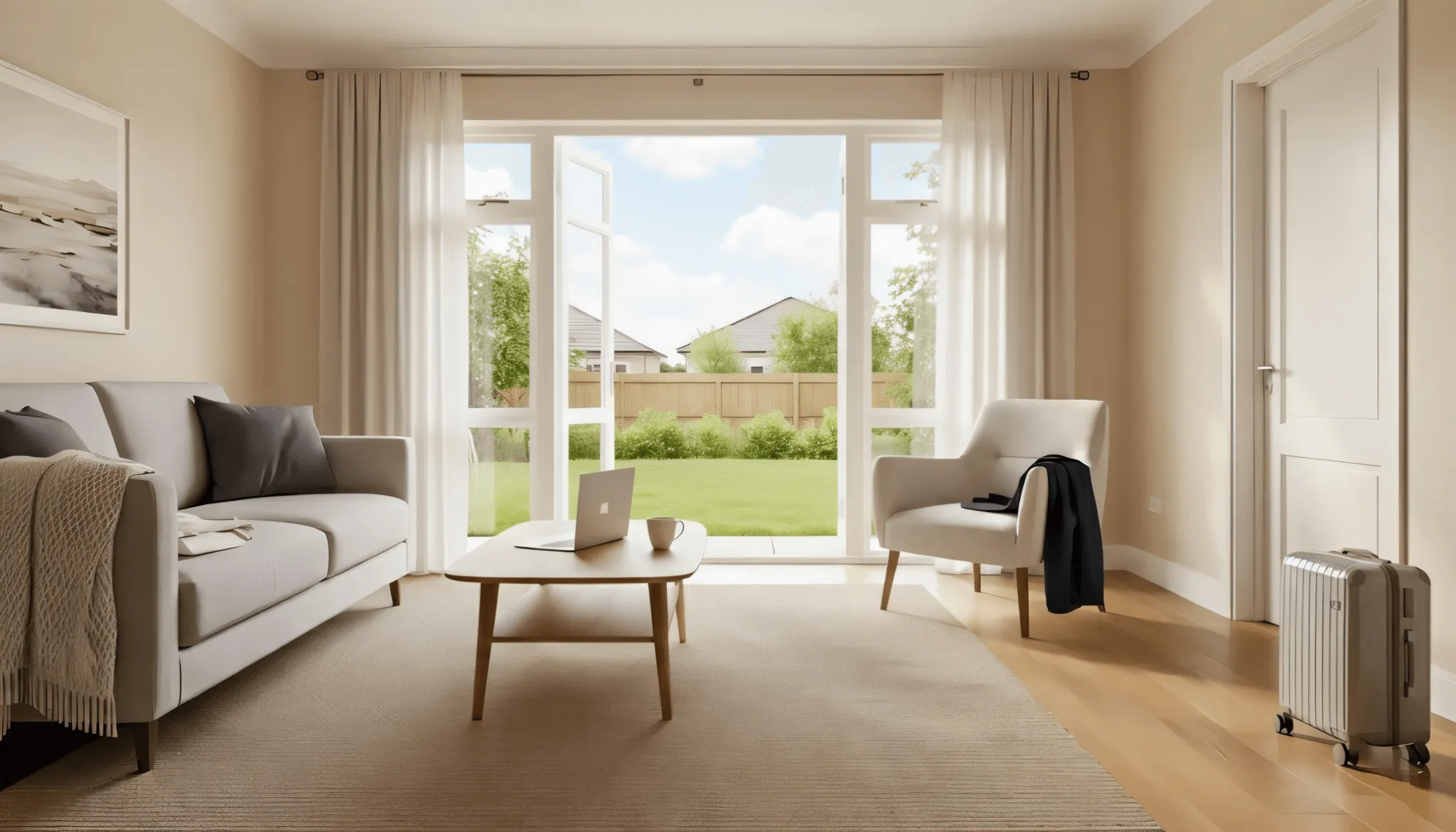
Corporate housing typically means a furnished apartment, condo, or home set up for business stays - often including utilities, internet, a kitchen and living space. (This is distinct from informal short-term rentals; corporate housing is commonly positioned as a professionally managed solution for employment-related stays.) Corporate Housing Providers Association (CHPA)
Hotels include traditional business hotels and extended-stay hotels with kitchenettes and weekly rates.
Both can work. The question is which option matches the assignment.
The Decision HR Actually Has to Make
In the real world, HR and relocation professionals are balancing four pressures at once:
Cost control (including hidden costs that don’t show up in room rate)
Duty of care and consistency across travelers and locations
Employee experience (stress, sleep, productivity, and family stability)
Policy compliance (approvals, caps, reimbursables, documentation)
It’s not “housing vs. hotel.” It’s risk vs. stability - and short-term convenience vs. long-term efficiency.
When Hotels Make Sense for Business Travel
Hotels can be the right call when the stay is short, the timeline is uncertain, or the employee needs immediate placement.
Hotels are usually best for:
Stays under ~10–14 nights
Last-minute assignments where speed matters more than customization
Roles with unpredictable schedules where nightly flexibility is critical
Travel that’s truly travel (in-and-out work trips, not relocation transitions)
Why HR likes hotels in these cases:
Fast booking and predictable check-in
Fewer moving parts (no utilities, no furniture, no setup logistics)
Loyalty programs (sometimes useful for frequent traveler roles)
Easy to standardize for short stays
But hotels start to break down when the “temporary stay” becomes a real phase of life.
When Corporate Housing Is Better for Employee Relocation and Project Teams
Corporate housing tends to dominate once the assignment becomes a relocation transition or a multi-week project deployment.
Corporate housing is usually best for:
Stays of 30+ days (and often 21+ days depending on market)
Relocations where employees are home-searching, waiting on closing, or transitioning schools
Project teams who need to stay productive without burning out
Employees traveling with family (or even pets)
Longer assignments where routine matters (sleep, meals, laundry, workspace)
Why this matters:
A hotel is designed for short stays. Corporate housing is designed for people living temporarily - without living uncomfortably.
Corporate housing is commonly larger than a hotel room and intended to support normal life patterns (cooking, working, decompressing), which can directly influence the employee experience during a transition.
Cost Comparison - Corporate Housing vs Hotel Stays
This is where many relocation and project budgets quietly bleed.
A hotel looks simple: nightly rate × nights.
But HR teams know the real cost includes:
Taxes and fees (which can be substantial depending on city rules)
Parking, resort fees, internet fees
Meal costs when there’s no true kitchen (or no time to cook)
Productivity loss when the employee is living in a “travel mode” environment
Burnout risk and turnover risk (especially for longer assignments)
On the corporate housing side, pricing is usually bundled:
Furnishings + utilities + Wi-Fi often included
More predictable monthly totals
Less “death by a thousand micro-charges”
And when organizations use reimbursement frameworks, it’s helpful to remember per diem lodging caps are based on hotel ADR (average daily rate) inputs and are designed for travel reimbursement structures - so HR programs often outgrow a pure per diem approach when stays become longer or more relocation-like. U.S. General Services Administration (GSA)
Employee Experience and Productivity Impact
For relocations and project deployments, housing influences:
Sleep quality
Meal quality
Routine stability
Ability to work after hours
Stress level
Family satisfaction
Here’s the simplest way to think about it:
Hotels optimize convenience.
Corporate housing optimizes stability.
If an assignment is short, convenience wins.
If an assignment is long or emotionally demanding (relocation, family transition, new city), stability wins.
And stability is what helps employees stay productive and show up as their best selves.
HR Housing Policies and Duty of Care Considerations
Many managed travel programs now address extended-stay accommodations within policy frameworks - because extended stays have become common enough to require structure and consistency. Global Business Travel Association (GBTA)
From an HR and mobility lens, that translates into:
Standardizing who qualifies for corporate housing
Defining approval thresholds by stay length
Creating safe, vetted housing pipelines that reduce risk and friction
Corporate Housing vs Hotel for Project-Based Workforces
If you want a decision rule your team can apply quickly, use this:
Choose a hotel when:
The stay is under 14 nights
Dates are uncertain
The employee will spend most time on-site or traveling daily
The goal is speed and minimal setup
Choose corporate housing when:
The stay is 21–30+ nights
It’s a relocation transition or home-search phase
The employee needs a kitchen, workspace, and real routine
Multiple people are traveling (team members, family)
You want fewer “incidentals” and more cost predictability
Common Relocation Scenarios and Best Housing Solutions
Scenario 1:
Relocation, home closing delayed 45 days
Best fit: Corporate housing
Why: It reduces stress, gives routine, and supports the home-search/closing phase without the employee living out of a suitcase.
Scenario 2:
Two-week project kickoff with unknown extension
Best fit: Hotel (initially)
Why: Flexibility matters. If the project extends, convert to corporate housing after the extension is confirmed.
Scenario 3:
Project team on-site for 8–12 weeks
Best fit: Corporate housing
Why: Teams perform better with normal-life amenities and less daily friction.
Scenario 4:
Traveling professional rotating cities every week
Best fit: Hotel
Why: Too much motion for a housing setup to deliver value.
How HR Teams Can Choose the Right Housing Option
The most effective HR and mobility programs don’t pick one - they set a threshold:
0–14 nights: Hotel
15–30 nights: Case-by-case
30+ nights: Corporate housing by default
This creates:
Predictability for budgeting
Consistency for employees
Faster approvals
Fewer exceptions (and fewer disputes)
Final Verdict: Which Housing Option Delivers Better Results?
If you’re housing someone for a short trip, a hotel is fine.
But if you’re supporting a relocation, a project deployment, or anything that becomes a temporary season of life, corporate housing often delivers the stronger outcome - financially and humanly.
Because the goal isn’t to “book lodging.”
The goal is to help employees arrive stable, so they can perform.
Corporate Housing vs Hotel: Frequently Asked Questions for Relocations & Project Teams
What is the main difference between corporate housing and a hotel?
Corporate housing provides furnished residential-style accommodations designed for longer business stays, while hotels are built for short-term lodging and overnight travel.
Is corporate housing cheaper than hotels?
For stays longer than 21–30 days, corporate housing often becomes more cost-effective due to bundled utilities, reduced nightly taxes, and fewer ancillary fees.
How long should an employee stay before switching from hotel to corporate housing?
Many HR programs use a threshold of 21–30 days as the point where corporate housing becomes the preferred option.
Is corporate housing appropriate for employee relocations?
Yes. Corporate housing is commonly used during relocation transitions when employees are waiting on home purchases, lease start dates, or permanent housing availability.
Can project teams stay in corporate housing?
Yes. Corporate housing is ideal for project teams working onsite for extended periods because it supports routine, workspace needs, and team comfort.
Do companies need special approval to use corporate housing?
Approval requirements depend on company policy, but many HR departments pre-approve corporate housing for extended assignments.
Is corporate housing safe for employees?
Professional corporate housing providers vet properties and manage accommodations to meet corporate duty-of-care expectations.
Does corporate housing include utilities and internet?
Most corporate housing packages include utilities, Wi-Fi, furnishings, and basic household setup.
Are extended stay hotels the same as corporate housing?
No. Extended stay hotels provide longer lodging options but typically offer less space, fewer residential amenities, and less privacy than corporate housing.
Which option improves employee satisfaction more?
For longer stays, corporate housing generally produces higher employee satisfaction due to comfort, privacy, and the ability to maintain daily routines.
Next Recommended Reads
Furnished Housing for Medical Professionals: Travel Nurse & Locum Tenens Housing Made Simple ( Coming February 2026 )

CORPORATE HOUSING | RELOCATION STAYS | FURNISHED HOMES FOR PROFESSIONALS
30 N. Gould Street Suite R
Sheridan, WY 82801
OUR NEWSLETTER
Stay updated with the latest industry news and locations around the nation.
Designed by maxCEOS Digital